Research, Innovation, and Burnout
“Hey uncle Chuck, how’s brain cancer these days?”
At 15, tact wasn’t one of my more notable qualities. He usually told me something exciting because he knew I was so interested in medicine, but not that day. That day, the larger than life family genius slumped.
“I feel like a grim reaper, Mel- I give people the worst news of their lives, and then I try to make them comfortable for a few months. I don’t know how much longer I can do it.”
He looked up and could tell I was concerned, so he added: “We have something we’re working on. We’re hoping it can help.”
A few years later I was lucky to shadow him at MD Anderson. I got to look at mouse hippocampal slices under a microscope. Chuck pointed out grandpa’s memorial plaque and was surprised that I remembered the dedication ceremony. I watched him shake his head after looking at a former patient’s recent imaging: radiation necrosis. I got to be in the room when he told a woman that her cancer was shrinking.
At one point, we passed a room with a lot of biohazard signs on it, and something that looked like a metal drum through the glass. I inquired nosily.
“Oh, that’s where we make viruses.”
Several brain blips and a “let’s hop in the wayback machine, Mr. Peabody” later, I managed to learn why, why on earth, virus-making had any place in cancer care.
He and his team had modified the receptors on cold virus so that the virus would only infect and destroy glioblastoma cells. He explained that while solid brain tumors are more operable, glioblastoma loved to pop up in pockets. A stealthy virus could attack in waves, like ripples in a pond.
They named it DNX-2401, or originally Delta-24-RGD. Chuck told me that it was named after the Delta Dart fighter jet and also a nod to his dad, the Air Force Colonel, but I can’t be sure if that’s true. I look up progress on the advancement every year or so. During graduate school, I asked if I could learn enough about his research to visualize it for him. I even won some awards for the piece. Shortly after I graduated, he passed away unexpectedly.
By the time he had died, their virus had over a decade of stability testing and was in pediatric trials in Spain. Using combination therapies, some patients had no disease progression even years later.
Almost just as importantly, there seemed to be a shift in my uncle those last several years. Patient conversations augmented from “there’s nothing we can do” to “we’re working on it.” He went from seeing the same problem over and over, feeling increasingly helpless, to affecting the change- and even if his research wasn’t the cure, future researchers could stand on his shoulders.
That engagement in research gave him hope and kept him going both behind the bench and at the bedside. It gave his patients and their families hope, too.
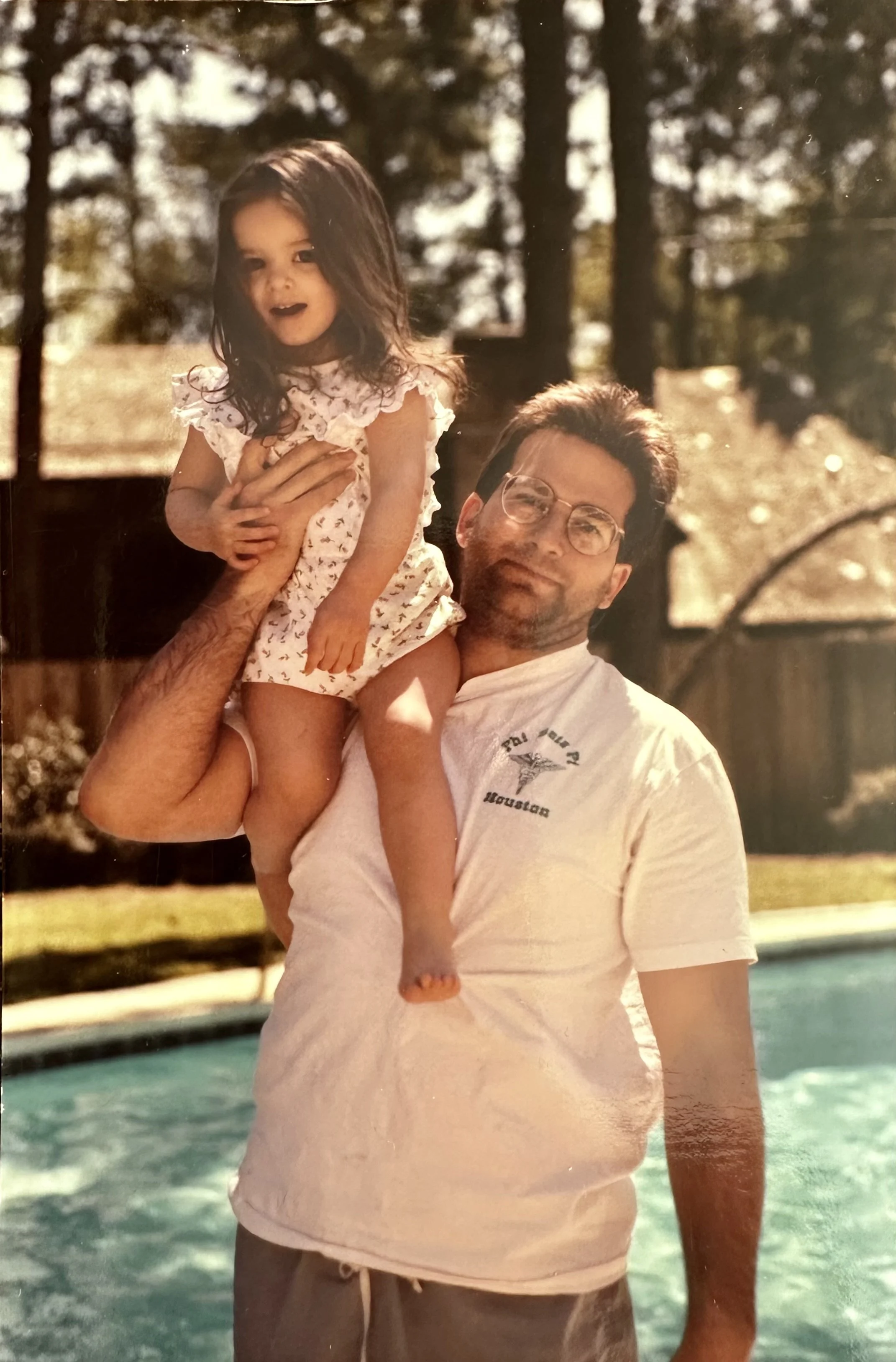
He was one of those people you would talk with and feel thrilled that you just might be keeping up. At the same time, he was an absolute goofball who loved Star Trek, dressing like a cowboy, and throwing his kids into the pool.
Burnout isn’t prevented by taking more trips- I strongly believe that a major driver of burnout is feeling like you have no agency to augment wave after wave of a problem’s impact. You see and can even predict what will happen, and it breaks your heart chips and nicks.
When you can affect the change and change the outcome, it’s easier to find the energy to stay engaged. It allows you to say “we’re working on it.”
